
What Is The Difference Between A Rollator And A Walker
Author: Hunter Appliances and Mobility Date Posted:10 February 2026
As people get older, walking can become difficult due to weak legs or poor balance. They start feeling tired after walking for a while without support. But having someone by your side for your assistance is not always possible. To keep living your life with freedom and independence, you need walking aids that help you move safely.
Walkers and rollators are two common mobility walking aids, which many people think are the same. However, they are different and work in different ways. Each one is made for different needs, and choosing the right walking aid is very important. The right choice can help prevent falls and make walking easier and safer for those with limited mobility.
If you want to learn about the difference between a rollator and a walker, read this blog by Hunteram, the best mobility aids provider in Hunter Valley, till the end.
Walker and Rollator: Definitions
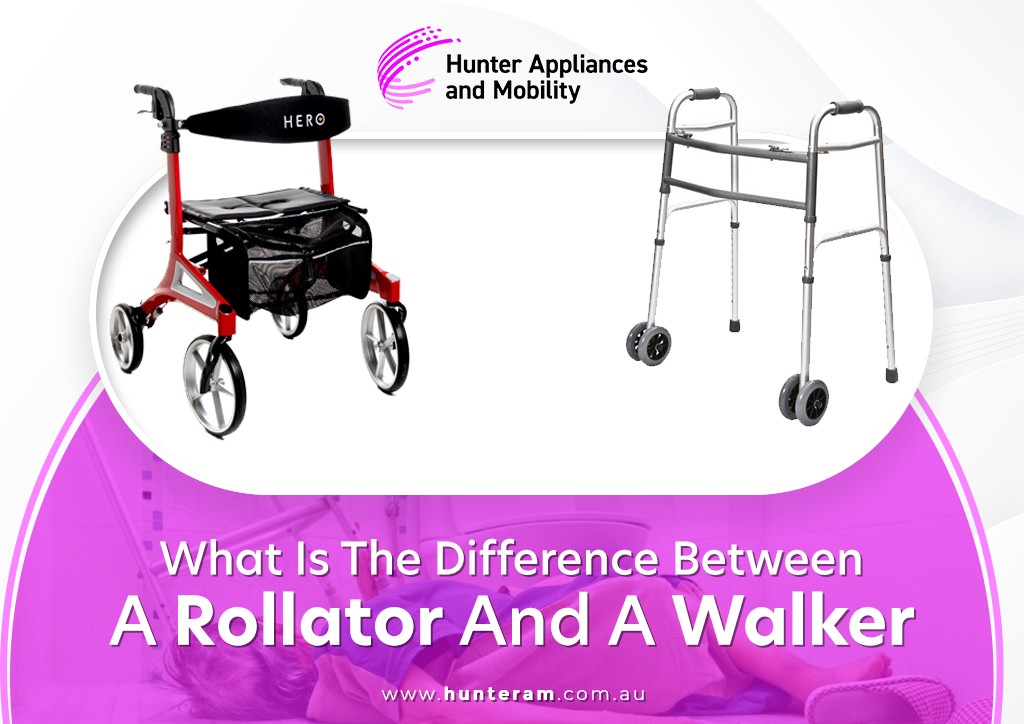
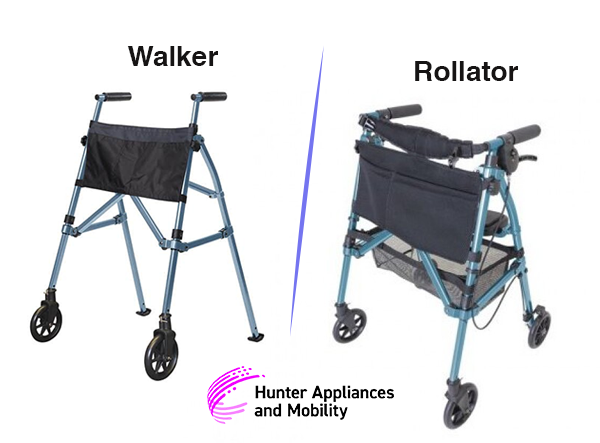
A mobility walker is a walking aid that helps people walk safely. It has four legs. You lift the walker to move forward, which helps you with balance. This walking aid gives you strong support, and it can be used inside or outside. Such walking aids are good for people who feel weak or unsteady.
On the other hand, a mobility rollator is a walking aid with wheels (usually four) that helps people walk more easily. You just push it instead of lifting it. And since it has wheels, it comes with hand brakes for safety. Some rollators have a seat that lets you sit and rest. You can also find a rollator with a basket or bags. All this makes the rollator great for longer walks.
Main Differences Between a Walker and a Rollator
Both walkers and rollators help people walk safely. But they work in different ways. Here is a table to help you learn about the main differences between the two walking aids:
| Feature | Walker | Rollator |
|---|---|---|
| Wheels | No wheels or 2 wheels in front | Has wheels (3 or 4) |
| How it moves | You lift it to move | You push it forward |
| Support level | Very strong support | Medium support |
| Balance help | Very good for balance | Good for balance |
| Speed | Slow walking | Faster walking |
| Seat | No seat | Usually has a seat |
| Best Use | Indoor or short walks | Outdoor or long walks |
Which One is Best for You?
It is very easy to get confused when choosing between a walker and a rollator. But we are here to help you choose the right mobility walking aid. So, here is what you should choose between the two:
Choose a Walker if:
- You walk slowly
- You need help inside the home
- You feel weak or very unsteady
- You need strong support when walking
Choose a Rollator if:
- You can walk more easily
- You want help with balance
- You want brakes you can use with your hands
- You want a mobility walking aid with a seat to rest when tired
Conclusion
Walkers and rollators both help people with limited mobility to walk safely. But they are made for different needs. A walker gives strong support to the user, and a rollator is easier to move and has a seat. The best choice depends on your strength and balance.
Using the right walking aid can prevent falls, which can make walking easier and more comfortable. Keep in mind that you should always choose what feels safe for you. If you need more information regarding the same, contact our team of professionals at info@hunteram.com.au or 02 4990 9320.
Additionally, not sure which walking aid works best for balance issues? Read our blog on the best walking aid for poor balance to get clarity.
FAQs
Q. What is the difference between a walker and a rollator?
A walker has no wheels or two wheels in front sometimes, and you lift it to move. But a rollator has wheels, and you push it.
Q. Who should use a walker?
People who are weak, unsteady, or need strong support should consider using a walker.
Q. Who should use a rollator?
People who can walk but need help with balance or want a seat should use a rollator to move.
Q. Which is safer for me?
The safest choice depends on your strength, balance, and walking needs. You should ask a doctor or therapist if unsure.